חיפוש מתקדם

גוסיני, רנה

Госинни, Рене


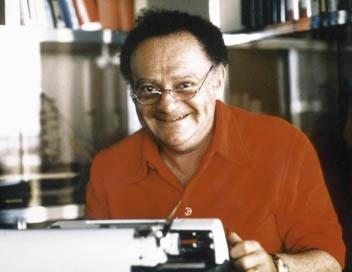
René Goscinny was a legendary writer of humor comics, of Polish-Jewish descent. His parents were Stanislaw Simkha Goscinny and Anna "Hanna" Beresniak-Goscinna. The family name Goscinny means "hospitable" in the Polish language. Stanislaw was a chemical engineer from Warsaw, and Anna was from a small village called Chodorków, in the vicinity of Zhytomyr. Warsaw is currently part of Poland, and Zhytomyr part of Ukraine. Through colorful and iconic characters and engaging stories, he became a master of the running gag, amusing puns, great slapstick violence and clever cultural-historical references. Together with Albert Uderzo, he created a sensation with 'Astérix' (1959-  ), one of the bestselling European comic series in the world, along with Herge's 'Tintin'. Popular with children and adults alike, the adventures of the indomitable Gaul are among the few comics admired by intellectuals, because of their great satire, vivid depiction of the Gaulish-Roman era and many double layers in language and cultural-historical references. In the same tradition, Goscinny's name is attached to another international bestseller, the cowboy comic 'Lucky Luke' by Morris. Even though he didn't join its production until nine years after its creation, he reshaped it into a hilarious parody of the western genre. Goscinny additionally wrote the popular book series about the naïve school boy 'Le Petit Nicolas' (1954-1965), illustrated by Jean-Jaques Sempe, while his other notable comic co-creations included the brawny Native American 'Oumpah-Pah' (1958-1962) with Uderzo, the dictatorial grand vizir 'Iznogoud' (1962-  ) with Jean Tabary and the nonsensical education parody 'Les Dingodossiers' (1965-1967) with Marcel Gotlib. And still, these are only a few of the dozens of comics he penned gags and narratives for.

One of the few comic writers of his generation as famous as the artist, he was a strong advocate for equal rights and appreciation for this often ignored profession. This closed several doors in the early stages of his career, but eventually led to him joining Jean-Michel Charlier, Albert Uderzo and other associates in the launch of the groundbreaking French comic magazine Pilote (1959-1989). Serving as its chief editor from 1963 to 1974, he played a huge part in its commercial success, introducing popular comic series and new creators, and helping the publishing house Dargaud grow into a powerful rival to the leading Belgian comics companies Lombard and Dupuis. Besides comics, Goscinny also wrote the scripts for animated feature adaptations of his creations, such as the classic films 'Astérix et Cléopâtre' ('Asterix and Cleopatra', 1968), 'Daisy Town' (1971), 'Les 12 Travaux d'Astérix' ('The 12 Tasks of Asterix', 1976) and 'La Ballade des Dalton' ('The Ballad of the Daltons', 1978). His most lasting legacy may be that he managed to get children interested in more sophisticated comedy, while proving to adults that comics could be enjoyed on a higher level

Goscinny, Rene

גוסיני, רנה

Госинни, Рене


René Goscinny was a legendary writer of humor comics, of Polish-Jewish descent. His parents were Stanislaw Simkha Goscinny and Anna "Hanna" Beresniak-Goscinna. The family name Goscinny means "hospitable" in the Polish language. Stanislaw was a chemical engineer from Warsaw, and Anna was from a small village called Chodorków, in the vicinity of Zhytomyr. Warsaw is currently part of Poland, and Zhytomyr part of Ukraine. Through colorful and iconic characters and engaging stories, he became a master of the running gag, amusing puns, great slapstick violence and clever cultural-historical references. Together with Albert Uderzo, he created a sensation with 'Astérix' (1959-  ), one of the bestselling European comic series in the world, along with Herge's 'Tintin'. Popular with children and adults alike, the adventures of the indomitable Gaul are among the few comics admired by intellectuals, because of their great satire, vivid depiction of the Gaulish-Roman era and many double layers in language and cultural-historical references. In the same tradition, Goscinny's name is attached to another international bestseller, the cowboy comic 'Lucky Luke' by Morris. Even though he didn't join its production until nine years after its creation, he reshaped it into a hilarious parody of the western genre. Goscinny additionally wrote the popular book series about the naïve school boy 'Le Petit Nicolas' (1954-1965), illustrated by Jean-Jaques Sempe, while his other notable comic co-creations included the brawny Native American 'Oumpah-Pah' (1958-1962) with Uderzo, the dictatorial grand vizir 'Iznogoud' (1962-  ) with Jean Tabary and the nonsensical education parody 'Les Dingodossiers' (1965-1967) with Marcel Gotlib. And still, these are only a few of the dozens of comics he penned gags and narratives for.

One of the few comic writers of his generation as famous as the artist, he was a strong advocate for equal rights and appreciation for this often ignored profession. This closed several doors in the early stages of his career, but eventually led to him joining Jean-Michel Charlier, Albert Uderzo and other associates in the launch of the groundbreaking French comic magazine Pilote (1959-1989). Serving as its chief editor from 1963 to 1974, he played a huge part in its commercial success, introducing popular comic series and new creators, and helping the publishing house Dargaud grow into a powerful rival to the leading Belgian comics companies Lombard and Dupuis. Besides comics, Goscinny also wrote the scripts for animated feature adaptations of his creations, such as the classic films 'Astérix et Cléopâtre' ('Asterix and Cleopatra', 1968), 'Daisy Town' (1971), 'Les 12 Travaux d'Astérix' ('The 12 Tasks of Asterix', 1976) and 'La Ballade des Dalton' ('The Ballad of the Daltons', 1978). His most lasting legacy may be that he managed to get children interested in more sophisticated comedy, while proving to adults that comics could be enjoyed on a higher level