חיפוש מתקדם

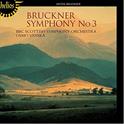
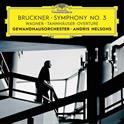
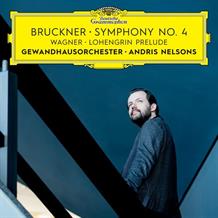
Andris Nelsons is quickly establishing himself as a leading Brucknerian, with an orchestra that is located quite close to the other contender for the key position, Christian Thielemann. Both their orchestras are magnificent, though with somewhat different emphases. The conductors are very different indeed, Nelsons offering free-flowing accounts which recall some of the older Brucknerians. This disc starts with the Prelude to Act I of Wagner’s Lohengrin, that ‘first example of hypnotism in music’ as Nietzsche called it. Certainly it is hypnotically beautiful here, played with faultless intonation and a sublime crescendo. It took me a bit of time to adjust to Bruckner’s misty opening, wonderful, beautiful as that is. It always makes me expect that the rest of the symphony will be up to the same standard, and it never is. The Fourth Symphony, along with the Third, is the one that Bruckner tampered with most, and over the longest period. One can hear why. He has marvellous material most of the time, but is evidently, as he must have felt, at a loss as to how to develop it – and the Fifth Symphony shows how he came to understand the nature of his gifts in a single bound.

 

BRUCKNER, ANTON
SYMPHONY No 4

Andris Nelsons is quickly establishing himself as a leading Brucknerian, with an orchestra that is located quite close to the other contender for the key position, Christian Thielemann. Both their orchestras are magnificent, though with somewhat different emphases. The conductors are very different indeed, Nelsons offering free-flowing accounts which recall some of the older Brucknerians. This disc starts with the Prelude to Act I of Wagner’s Lohengrin, that ‘first example of hypnotism in music’ as Nietzsche called it. Certainly it is hypnotically beautiful here, played with faultless intonation and a sublime crescendo. It took me a bit of time to adjust to Bruckner’s misty opening, wonderful, beautiful as that is. It always makes me expect that the rest of the symphony will be up to the same standard, and it never is. The Fourth Symphony, along with the Third, is the one that Bruckner tampered with most, and over the longest period. One can hear why. He has marvellous material most of the time, but is evidently, as he must have felt, at a loss as to how to develop it – and the Fifth Symphony shows how he came to understand the nature of his gifts in a single bound.
 

SOUND'S OF THE 30s
SYMPHONY No 1 IN E FLAT MAJOR OP.28
SYMPHONY No 5 IN C MINOR OP.67
OVERTURE "A MIDSUMMER NIGHT'S DREAM"
SYMPHONY No 1 IN G MINOR OP.13 "WINTER DREAMS"
Modern Classics
The 2 Symphonies -"Faust" Ballet Music
Anton Bruckner
Hearts That Strain
Ravel- Lasser-Gershwin
Richard Wagner (1813-1883)
Anton Bruckner (1824-1896)
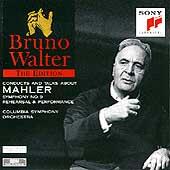
Gustav Mahler (1860-1911)
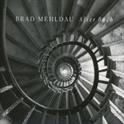
After Bach
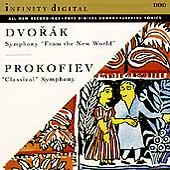
Dvorak-Prokofiev
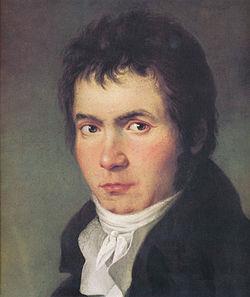
Beethoven
MAHLER, GUSTAV
BRUCKNER, ANTON
BRUCKNER, ANTON
VARIOUS COMPOSERS