
A friend, a fellow cartoonist, wrote to me a few years back about how desperate the state of the world looked: wars, greed, corruption, political shenanigans, terrorism, infighting and intrigue. Should be a great year for us, he said. Sempé, the great French cartoonist, once drew a cartoon where you could see not only the theatre audience but also, behind the fallen curtain, the actors. The audience, having just seen a tragedy, were leaving the theatre in tears; the cast, having performed the play so well that the audience had been moved to tears, were celebrating wildly. The cartoonist's function is the reverse of the tragedian's; we try to extract something from the misery out there that will keep the audience smiling - if not actual laughter, then at least a grunt of agreement or a laugh of desperation.
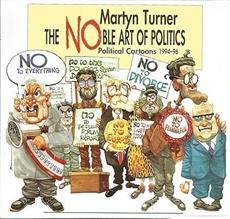
So why The NOble Art of Politics? Well, the 'noble art' is boxing, and politics in this country is the next worst thing to boxing. And the NO in 'NOble' is because all our politicians have a proclivity to saying NO, as if compromise was some sort of disease to be avoided at all costs. And then the 'ble' bit is pronounced bull and when they are not saying NO, the politicos are usually spouting bull. It's amazing, with all those things going for it, that I hadn't used the title before now. This is, after all, my eleventh book of cartoons (some of the others still available in good bookshops).
The last two years were probably somewhat worse for the world than usual and therefore, theoretically, somewhat better for cartoonists. But there is a limit to everything. The day I write this the two main news stories are the bombing of Grozny and the aftermath of the Belgian paedophilia murdercases. There are some things that are just uncartoonable. At home we have had the aftermath of the ending of the IRA ceasefire. It has been equally hard to be creative and imaginative when, for example, we enjoy the utterings of creative and imaginative politicians who can blame an IRA bomb in London on the British government or who can call Drumcree a triumph for democracy and tolerance. Follow that. Well, I tried to, and in these 120 pages you can see how...
MARTYN TURNER
AUGUST 1996