Advanced Search
NEWHOUSE, VICTORIA

The last thirty years of the twentieth century saw the birth of more than six hundred art museums in the United States alone, with equal proliferation in much of Europe. Such projects as Frank Gehry's Guggenheim in Bilbao and Richard Meier's Getty Center in Los Angeles have dominated television newscasts and newspaper headlines worldwide. The success or failure of these new museums, in aesthetic, educational and financial terms, results from a variety of factors, none more important than their architecture.

In this unique investigation, architectural historian Victoria Newhouse challenges many hitherto accepted premises of museum design. She demonstrates that new museums are often based on old concepts that no longer apply. This unvarnished analysis is informed by interviews with museum directors and curators, collectors, artists and the architects themselves.

Newhouse divides her discussion according to the dominant characteristics of the museums: private collections, single-artist museums, sacred spaces, artists' self-created sites, and museum additions. In addition to the Getty and the Guggenheim Bilbao, the author discusses the Menil Collection in Houston, Texas; the Andy Warhol Museum in Pittsburgh; the Kiasma Museum for Contemporary Art in Helsinki; Donald Judd's Chinati Foundation in Marfa, Texas; the Metropolitan Museum of Art and the Museum of Modern Art in New York; the Grand Louvre and the Centre Georges Pompidou in Paris; and many more. (less)

The Hermitage
Gehry talks
Workspheres
Towards A New Museum
727.6 NEW

The last thirty years of the twentieth century saw the birth of more than six hundred art museums in the United States alone, with equal proliferation in much of Europe. Such projects as Frank Gehry's Guggenheim in Bilbao and Richard Meier's Getty Center in Los Angeles have dominated television newscasts and newspaper headlines worldwide. The success or failure of these new museums, in aesthetic, educational and financial terms, results from a variety of factors, none more important than their architecture.

In this unique investigation, architectural historian Victoria Newhouse challenges many hitherto accepted premises of museum design. She demonstrates that new museums are often based on old concepts that no longer apply. This unvarnished analysis is informed by interviews with museum directors and curators, collectors, artists and the architects themselves.

Newhouse divides her discussion according to the dominant characteristics of the museums: private collections, single-artist museums, sacred spaces, artists' self-created sites, and museum additions. In addition to the Getty and the Guggenheim Bilbao, the author discusses the Menil Collection in Houston, Texas; the Andy Warhol Museum in Pittsburgh; the Kiasma Museum for Contemporary Art in Helsinki; Donald Judd's Chinati Foundation in Marfa, Texas; the Metropolitan Museum of Art and the Museum of Modern Art in New York; the Grand Louvre and the Centre Georges Pompidou in Paris; and many more. (less)
The Guggenheim Museum, Justin K. Thannhauser Collection
Sorted
The Metropolitan Museum Of Art
Sorted
THE MUSEUM OF INNOCENCE
Art Masterpieces of Florence
Sorted
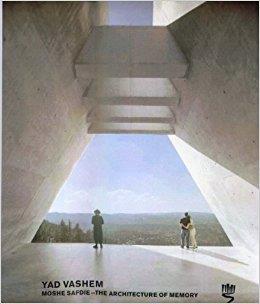
Moshe Safdie - The Architecture Of Memory
Sorted
The Museum Transformed
Sorted
Architecture Now! Museums
Sorted
Masterpieces Of Fifty Centuries
Sorted
THE J. PAUL GETTY MUSEUM HANDBOOK OF THE COLLECTIONS
Sorted
Twentieth-century museums I
Sorted
Designing the new museum
Sorted
Night at the Museum
English (Simple)
The Hermitage
Sorted
Frank O. Gehry: Guggenheim Museum Bilbao
Sorted
Gehry talks
Sorted
Towards post-modernism
Sorted
Workspheres
Sorted
Design and the elastic mind
Sorted
Light Construction
Sorted
Theatre in revolution
Sorted